
Sickle Cell, Trauma & the Gut-Brain Connection
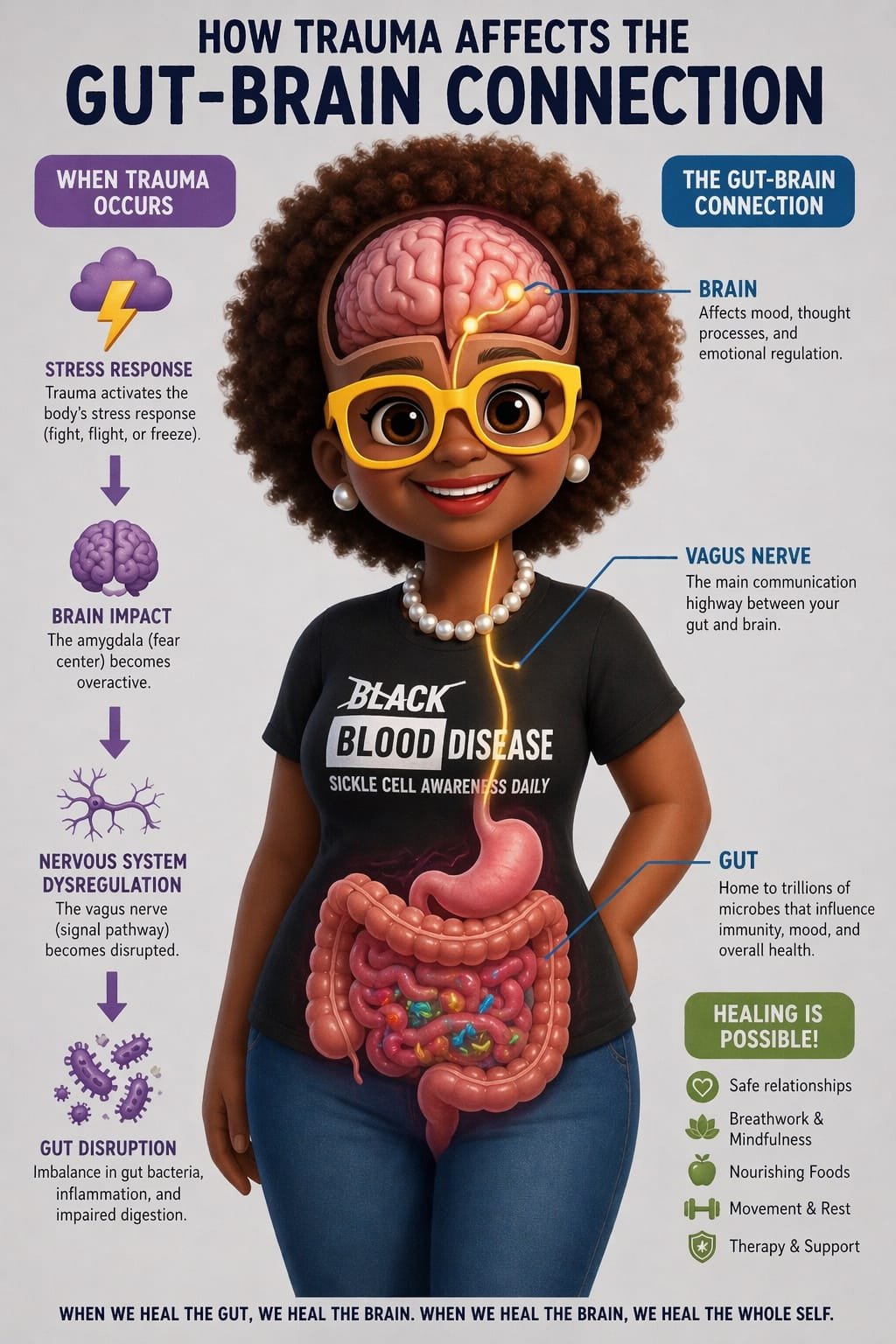
Trauma isn’t just stored in the mind—it’s carried in the body. For individuals living with sickle cell disease, that trauma is often layered, chronic, and deeply embodied. It’s not just the pain crises. It’s the unpredictability. The medical trauma. The systemic racism. The family dynamics shaped by fear, survival, and misunderstanding. All of this directly impacts the gut-brain axis. When the body repeatedly perceives threat—whether from physical pain or emotional stress—it shifts into survival mode: • Increased cortisol • Altered gut motility • Disrupted microbiome balance • Heightened inflammation Over time, this chronic state can contribute to: – Bloating, constipation, or IBS-like symptoms – Food sensitivities – Anxiety and mood instability – Cravings and dysregulated reward pathways For many sickle cell warriors, these symptoms are often dismissed, misunderstood, or treated in isolation. But the truth is: You cannot separate the body from the lived experience. The trauma of being unheard in medical settings… The stress of navigating bias in care… The emotional weight carried within families trying to survive a genetic condition… All of it lives in the body. This is why addressing gut health without addressing trauma often falls short. Healing requires a dual approach: • Supporting the microbiome through nourishment and targeted support • Regulating the nervous system through safety, trust, and trauma-informed care For providers working in hematology, pain management, and mental health, this is a critical opportunity: When we help sickle cell patients feel safe in their bodies—not dismissed, not rushed, not doubted—we create the conditions for both neurological and digestive healing. The gut doesn’t just digest food. It processes safety, stress, and emotional experience. If we want better outcomes in sickle cell care, we have to treat more than the blood. We have to treat the trauma, too.